

RICS is committed to fostering greater diversity in the construction adjudication sector, and is advocating for greater representation of women in adjudication roles. In recent years, there has been a gradual rise in the number of women undertaking the RICS Diploma in Adjudication, an essential qualification for inclusion on the RICS Panel of Adjudicators. Whilst this progress is encouraging, women adjudicators still constitute a minority. According to a 2022 study of the UK’s construction dispute resolution sector by King’s College London (KCL), just under 8% of adjudicators are women.
To address this imbalance, RICS has committed to an annual industry scholarship intended to cultivate talent and diversity within alternative dispute resolution roles in the construction industry. The scholarship grants one individual the opportunity to enrol on the RICS Diploma in Adjudication.
Meet our winners below.
2025 Winner
Elaine Huskinson
Senior Quantity Surveyor, Vextrix

What inspired you to apply for the scholarship?
Honestly, working on a response to an adjudication. I remembered how much I enjoyed the work, but also how much I had to learn. I felt that I could have been better positioned to support my client if I had only applied for the scholarship last year. I chose not to submit my application through a mix of imposter syndrome and my parent’s health requiring my support. I regretted not applying and decided to be brave and see what could happen if I went outside my comfort zone. My aim was to make it to the essay stage, but really, I wanted to win the scholarship.
As someone who has struggled with impostor syndrome, the application process has allowed me to reflect on my own achievements and see what others have always seen in me. I would recommend any woman that is considering completing the course to apply.
Can you tell us a bit about your background in construction?
It does not feel like it, but I have worked in construction for eighteen years. Most of my time has been at tier one contractors working within rail. Starting in a finance role, I moved to a commercial role in 2013 when I joined Buckingham Group. I was enrolled on to the degree apprenticeship in 2018, completing the degree in 2020 and becoming a Chartered in December 2021. During this time, I worked on varying projects to support my apprenticeship and development.
In 2022 I made the switch to a consultancy and role of PQS. At Vextrix, I am currently working as QS and CA/EA on various rail schemes, no two days are the same, and I have thoroughly enjoyed the switch.
What do you hope to gain from the Diploma in Adjudication?
Having worked for a tier one contractor preparing evidence and as Contract Admin and Employers QS at Vextrix I have seen both sides of the adjudication and have a full appreciation in the work entailed on both sides.
By completing the course, I will have a greater understanding of what it takes to review submitted documents and what is involved in planning and running an adjudication.
I want to position myself as someone who can provide advice on how to prevent engaging in disputes and provide greater support in the preparation of evidence for adjudication when it is necessary. I thoroughly enjoy reviewing contract practice and providing advice on lessons learnt for future projects.
By continuing to develop my own skills and knowledge I am also setting a positive example to my peers and junior members of staff on being able to continue to their development and learning.
What impact do you hope to make in dispute resolution?
I want to improve representation by proving it is possible for women to stay in the industry and work in dispute resolution.
I also want to prevent disputes by providing advice on how they are prevented. I know that it is inevitable that disputes arise, but adjudication should not be used as a threat to intimidate the other party into submission. Nor should the process be feared. Parities should be motivated to ensure that records are kept in a clear and concise manner.
2024 Winners
Victoria Clapp
Senior Associate Quantity Surveyor
Cost, Commercial and Quantity Surveying Technical Principal, Mott MacDonald
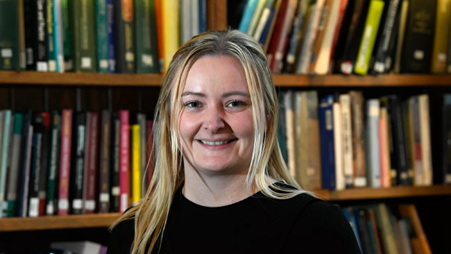
What inspired you to apply for the scholarship?
My degree was in business and law, so the contract side of Quantity Surveying has always been my draw to the industry. Completing the Adjudication course and getting more involved in the dispute resolution sector has long been a part of my career plan, as I put on my RICS Fellowship application back in 2021 that my future plans were to complete this course, so when the opportunity arose, it was a no brainer to go for it!
Can you tell us a bit about your background in construction?
When I finished my degree, I did a few different roles and was thinking about the career path I wanted to take. My dad suggested Quantity Surveying, as that is what my Uncle did.
He suggested it as the role is based in maths and law, which are the things I did well in academically. Also, I already understood the construction sector as my Dad was a plumber so I had been on sites with him as a child (not that you could do that now!).
So, alongside my QS Masters, I started out contractor side working on fit out projects where I progressed to the lead QS on the Co-op stores projects. Wanting to further develop and broaden my knowledge, I moved to Mott MacDonald where I started working in the buildings team on schools and universities. From here I moved into defence where I worked on Defence Infrastructure Organisation projects, completed a client secondment with Babcock and progressed to leading the defence QS team for three years. My most recent move has been back into buildings as the UK Hub Commercial Manager, building The LINE for NEOM.
I’ve also had some great opportunities to get involved in business development and best practice as the Technical Excellence Leads assistant, the Innovation Lead and most recently the Excellence Lead for Cost, Commercial and Quantity Surveying. Externally I have had the pleasure of serving on the RICS Matrics UK board, the QS Forum, the European Council of Construction Economics and most recently the RICS Governing Council on one of the UK & Ireland seats.
What do you hope to gain from the Diploma in Adjudication?
I hope to gain a comprehensive understanding of construction adjudication, including the legal principles building upon my previous qualifications, and practical skills required to resolve disputes effectively as I am passionate about continuous learning and development.
I also hope to grow my network within the industry. Earning this diploma from the RICS will also enhance my professional credibility and demonstrate my commitment to high standards. I intend to apply the knowledge and skills gained from this diploma to manage and resolve construction disputes more efficiently in my role as a Quantity Surveyor, and perhaps one day apply for the RICS Presidential Panel of Adjudicators.
What impact do you hope to make in dispute resolution?
I aim to build and maintain positive relationships by encouraging collaborative solutions that satisfy all parties involved. Using the knowledge I've gained, I strive to find fair resolutions to conflicts. My goal is to promote smoother communication and understanding, leading to amicable results and contributing to a more harmonious working environment and better relationships.
As I noted in my application essay, people often need to see others like themselves in roles to feel encouraged to join an industry - 'See it to be it'. As a neurodiverse woman in the field, I hope to inspire others to join the industry and help tip the balance towards greater diversity.
Iona Morrison MRICS
Senior Project Manager, Turner & Townsend

What inspired you to apply for the scholarship?
When I first started my career as part of a graduate development programme, a colleague and mentor who I was working closely with was a qualified adjudicator. He would explain the legal and contractual ways of assessing disputes as well as the process of adjudication and would implement these skills while working as a project manager. This sparked my interest in dispute resolution and from then on, I have always been interested in understanding contracts and developing analytical skills for assessing claims.
I was excited to learn about the RICS DRS offering the 'Women in Construction Scholarship' to undertake the RICS Diploma in Adjudication as it demonstrates the commitment of the RICS to promoting greater diversity in a heavily underrepresented sector of the industry, providing an opportunity for more women to develop their skills in dispute resolution.
Can you tell us a bit about your background in construction?
I am a senior project manager at Turner & Townsend, a global consultancy firm where my role involves leading and managing multidisciplinary teams to deliver successful projects. I initially studied Architectural Technology at Robert Gordon University and then continued my education by undertaking a Masters in Construction Project Management. Following completion of my masters, I joined the AECOM graduate development programme in London where I achieved my RICS chartership after working to deliver a wide range of projects including high-end mixed use, extensive commercial refurbishments and large-scale residential developments.
I moved back to Scotland in 2023, where I was then involved in delivering airfield refurbishment projects across the UK within the defence sector. Within my new role at Turner & Townsend, I will be leading on local authority education and residential projects across Edinburgh and the Scottish Borders.
What do you hope to gain from the Diploma in Adjudication?
By undertaking this diploma, I hope to gain a more in-depth understanding of the skills required to become an adjudicator and the wider legal principles of construction disputes. Disputes arise on almost every project and having a comprehensive understanding of how to assess these can be extremely beneficial to my clients, mitigating lengthy claims, reducing time and cost impacts and maintaining strong client relationships.
Gaining an advanced knowledge of contractual and legal frameworks will allow me to provide clear and reasoned advice to my clients from the outset, ensuring the right decision is made quickly and will allow me to build confidence in assessing more complex disputes later in my career. By completing this diploma, I also can apply to an Adjudicator Nominating Body panel and promote myself as an adjudicator in the wider market and advance my career within the construction industry.
What impact do you hope to make in dispute resolution?
I would hope that by undertaking this diploma, I can help demonstrate the vast range of opportunities the construction industry can offer. Showcasing that dispute resolution can enhance the knowledge and skills of anyone working in the construction related sector and can provide an exciting career path.