

Unlocking Housing Delivery: Insights from the RICS & WMCA Residential Grant Funding CPD Event
-
 Email
Email
-
 Facebook
-
 Linkedin
-
 Twitter
-
 Whatsapp
13 May 2026
Authors:
Ben Dean FRICS MCMI Director, Turner & Townsend & RICS West Midlands Board Member
Dr Rebecca McElliott, Regeneration Programme Manager & Member of the RICS West Midlands Advisory board, Bromsgrove District Council
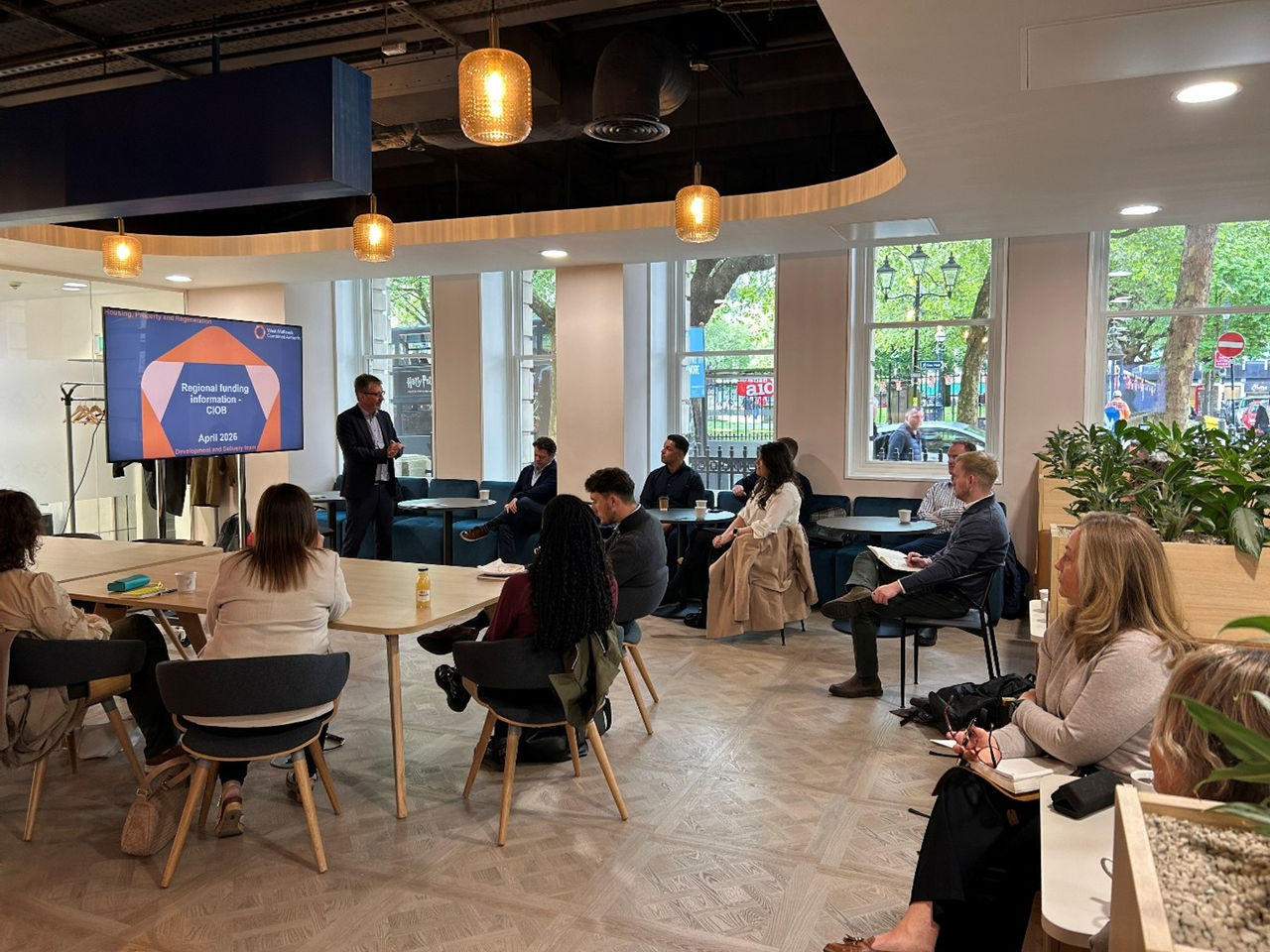
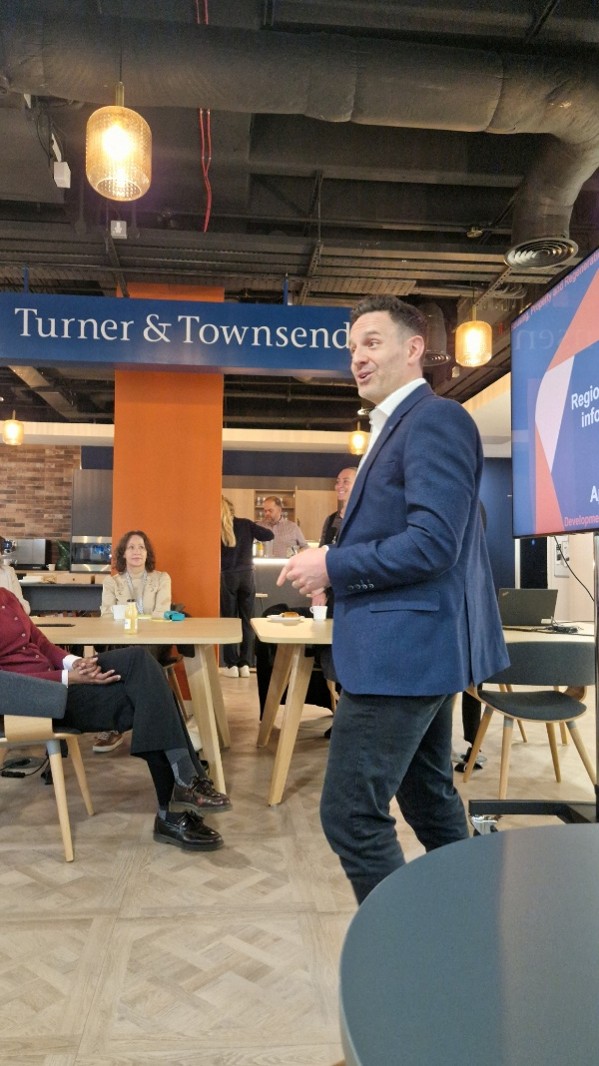
Professionals from across the development, planning, housing and funding sectors recently gathered at Turner & Townsend Birmingham for a focused discussion on residential grant funding through the West Midlands Combined Authority (WMCA).
The session explored how funding is being used to unlock residential development across the region, particularly on brownfield sites, and provided practical insight into the application and assessment process for grant support.
WMCA’s Role in Residential Development
Olly Dyke (Senior Development Manager, WMCA) outlined how WMCA works alongside local authorities, registered providers, developers and government agencies to accelerate housing delivery across the West Midlands.
A key focus of current activity is supporting social and affordable housing delivery, aligned with the priorities of West Midlands Mayor, Richard Parker.
The WMCA development team operates regionally, with individual development managers responsible for specific WMCA constituent member areas. This place-based approach aims to strengthen relationships with councils and local developers while improving understanding of local market conditions.

Supporting Viable Housing Schemes
Olly emphasised that funding is directed towards projects where intervention can genuinely unlock delivery.
This often includes:
- Brownfield sites.
- Regeneration projects.
- Build-to-rent developments.
- Infrastructure-led housing schemes.
- Sites with abnormal development costs.
A recurring theme throughout the session was pragmatism. While affordable housing remains an important objective, WMCA acknowledged that some sites — particularly complex brownfield locations — may require flexibility in order to proceed.

The Application Process
The funding process begins with an Expression of Interest (EOI), where applicants provide high-level information about:
- The proposed development.
- Site status and planning position.
- Estimated Gross Development Value (GDV).
- Construction costs.
- Abnormal costs.
- Funding requirements.
Applicants are expected to demonstrate both:
- Viability — proving there is a genuine funding gap.
- Deliverability — showing the scheme can realistically proceed.
Once progressed to a full application, schemes require more detailed financial and technical information, including proposed funding structures and evidence of site control.
Olly noted that, where sufficient information is provided, decisions can often be reached within four to six weeks. However, the speed of progression depends heavily on the quality and completeness of submissions from applicants and their professional teams.
Due Diligence and Grant Agreements
An important part of the process is independent due diligence.
Following approval in principle, WMCA appoints external consultants to review appraisals and validate funding requirements. Grant agreements then formalise:
- Funding arrangements.
- Delivery obligations.
- Milestones.
- Security requirements.
- Clawback and overage provisions.
In most cases, grant funding is released towards the end of the project. Earlier drawdowns may be possible through a phased approach, but generally require additional security arrangements.
Affordable Housing and Flexibility
The event explored how affordable housing requirements are applied within WMCA-supported schemes. Historically, a minimum of 20% affordable housing expectation has often been used. However, Olly stressed that this is not an absolute requirement in every case.
On some complex sites — particularly high-rise or difficult brownfield developments — strict affordable housing targets may make schemes undeliverable. In such circumstances, WMCA may adopt a more flexible approach where doing so enables regeneration and housing delivery to proceed.
Affordable housing itself was also described broadly, potentially including:
- Discounted market sale.
- Affordable rent products.
- Other tenure models meeting affordability objectives.
Homes England and the “Funder of Last Resort”
Discussion during the Q&A focused heavily on the relationship between WMCA and Homes England. The WMCA generally acts as the “funder of last resort” within the West Midlands, meaning applicants must demonstrate that alternative funding avenues have already been explored.
Homes England, meanwhile, often becomes involved earlier in the development lifecycle, particularly through seed funding or pre-programme support designed to help schemes reach viability.
The evolving Strategic Place Partnership between WMCA and Homes England is enabling coordination and reducing duplication between agencies.
Viability Challenges and Land Values
One of the most engaging discussions centred on viability pressures within the regional development market. Attendees raised concerns about schemes acquired during periods of inflated land values — particularly in areas such as Digbeth — where optimistic regeneration expectations and external investment significantly increased prices.
Developers highlighted the difficulty of delivering viable schemes where:
- Land was acquired at peak market values.
- Planning delays extended holding periods.
- Construction costs have risen sharply.
- Funding assumptions have changed.
WMCA representatives acknowledged these challenges while reiterating that public funding cannot simply compensate for overpaid land acquisitions. At the same time, it is recognised the wider tension between:
- Achieving value for money for public investment.
- Supporting viable regeneration.
- Encouraging affordable housing delivery.
- Maintaining momentum in the housing market.
Devolution and Regional Decision-Making
The session also reflected on the broader shift toward devolved housing and infrastructure funding. Attendees discussed that regional decision-making allows for a more nuanced understanding of local markets and development challenges compared with centrally administered funding models.
The move toward integrated multi-year settlements was described as an important step toward greater devolution, giving regional authorities increased flexibility to prioritise investment according to local needs.
However, it was also acknowledged the complexities of delivering regeneration within the West Midlands’ diverse political and economic landscape.
Key Takeaways
The CPD session provided valuable insight into the realities of residential grant funding in the West Midlands, with several clear themes emerging:
- WMCA funding is intended to unlock otherwise stalled housing schemes.
- Viability and deliverability remain central to all applications.
- Brownfield regeneration continues to be a major priority.
- Affordable housing expectations are applied pragmatically.
- Strong evidence and robust appraisals are essential.
- Collaboration between developers, local authorities and funding bodies is increasingly important.
For built environment professionals, the event highlighted both the opportunities and challenges involved in bringing forward residential development in a rapidly evolving funding and policy landscape.