
Education Quarterly Newsletter - October 2026
-
 Email
Email
-
 Facebook
-
 Linkedin
-
 Twitter
-
 Whatsapp
Welcome to the RICS Quarterly Accreditation Newsletter
This newsletter is designed to keep you informed about accreditation activities from around the world, share insights and experiences from other accredited programmes, and encourage the exchange of knowledge across our global community.
Please feel free to share the newsletter with colleagues who may find it useful. If there is someone who should be included on our quarterly distribution list, please let us know.
We would also love to hear from you. If you have an interesting initiative, example of good practice, success story, or other topic you would like to see featured in a future edition, please get in touch with the team.
RICS and iBEE Accredited Providers Conference 2026
RICS welcomed academics, industry professionals and education leaders on 10 and 11 September. The RICS conference ran alongside CHOBE’s Innovation in Built Environment Education (iBEE) conference, creating a valuable forum for collaboration between higher education, professional practice and the wider built environment sector.
Delegates exchanged ideas, explored innovative teaching practices, and considered how education can continue to respond to the changing needs of the profession.
Artificial intelligence and the future of learning emerged as a key theme throughout the conference. Keynotes, presentations, and interactive workshops considered both the opportunities and challenges presented by AI, from its responsible integration into built environment curricula to assessment design and maintaining authentic learning.
Sessions also explored innovative approaches to collaborative learning, professional readiness, digital assessment and experiential education, alongside wider discussions around equity, wellbeing, social mobility, and student belonging.

Ian Jeal, Executive Director of Education Standards and Qualification

Danni Foster with the Next Generation Panel
The accreditation of The Chinese University of Hong Kong (CUHK) for its new Master of Science in Sustainable Urban Planning programme in July provided an opportunity to explore how the programme is preparing students for professional practice and for the changing needs of the urban environment.
The programme places emphasis on developing the technical knowledge, analytical thinking and professional skills that students need as they progress into careers in urban planning and the wider built environment.

The Chinese University of Hong Kong (CUHK) New Programme Accreditation
The accreditation was marked with a visit by RICS Global President Nicholas Maclean, OBE RD FRICS IRRV (Hons), in September to present the certificate of accreditation.

Accreditation Certificate presentation at CUHK.
RICS visited the University of East London to accredit five programmes: BSc (Hons) Quantity Surveying and Commercial Management (QSCM); BSc (Hons) Surveying and Mapping Sciences; BSc (Hons) Construction Management; MSc Construction Engineering Management; MSc Project Management with Digital Technology.
Andrew Arewa, Director of Sustainable Occupational Safety and Health Research Centre (SOSHRC) said “The RICS accreditation outcome was received with great joy by our team at UEL. Once again, thanks to your panel members, and your excellent leadership before and duration the accreditation visit.”
On 2 September 2026, RICS visited ESSEC Business School to review its MSc in Hospitality Management (IMHI).
Established 45 years ago, IMHI is a specialised postgraduate programme delivered in English and focused on the financial, investment and asset-management dimensions of the hospitality industry and related real estate.
While hospitality education is often associated primarily with the operational management of hotels and other hospitality businesses, IMHI has developed a distinctive focus on the business, financial and real estate aspects of hospitality assets.
The visit highlighted the relevance of the programme to the changing relationship between the hospitality and real estate sectors.
The review of IMHI builds on RICS's continuing engagement with ESSEC Business School. In September 2025, an RICS accreditation panel visited the School to review the, Master in Mangement Immobilier (MMI), the Master in Urban Innovation (MUI) and the MiM Chaire Immobilier with Real Estate Track.
Hong Kong Metropolitan University (HKMU) Bachelor of Science with Honours in Construction Management and Quantity Surveying has been accredited.
The visit also provided a valuable opportunity for RICS and HKMU to exchange ideas on the programme’s continued development and its connection with the profession.

Hong Kong Metropolitan University (HKMU) Accreditation
Manchester Metropolitan University’s MSc Construction Project Management was accredited in June. Dr Greg Watts said “This is a fantastic step forward, a brilliant accomplishment for our programme and team, and the start of a great relationship between The Manchester Metropolitan University and RICS.”
RICS visited Oxford Brookes University to re-accredit its Built Environment provision.
The review panel were impressed with the quality of the learning environment and facilities available to students, as well as the strong engagement and support from staff across the Built Environment area.
The panel also highlighted the university’s focus on providing students with a practical, industry-relevant education, supporting them to develop the knowledge and skills needed to progress into the profession.
On 16 September 2026, members gathered in Italy for the RICS Italy Annual Meeting, bringing together professionals and leaders from across the Italian real estate and built environment sectors to recognise achievements, discuss developments within the profession and consider priorities for the years ahead.
One of the highlights of the meeting was the recognition of 25 years of RICS accreditation of the Master REM at Politecnico di Milano.
The longstanding partnership between RICS and Politecnico di Milano extends beyond programme accreditation: academics and professors associated with the Master REM played an important role in the early development of RICS's presence in Italy, including the establishment of the first RICS Board and the first Italian chapter; support IREC (International Real Estate Challenge), a student competition that brings university students together to work on real-world real estate challenges, encouraging collaboration between education and industry and providing students with an opportunity to apply their academic knowledge in a professional context; and when the Politecnico di Milano hosted the first RICS European Education Forum in 2025.

Ian Jael, Executive Director Education Standards and Qualifications and Gloria Brocchi MRICS presents Oliviero Tronconi FRICS and Marzia Morena FRICS with certificates of appreciation
The 32nd European Real Estate Society (ERES) Annual Conference took place in Vienna from 1–4 July 2026, hosted by TU Wien.
RICS actively participates in ERES and values the opportunity to engage with academics from across the real estate sector.
This year's conference provided an opportunity to explore some important questions around the relationship between higher education and professional qualification, education and professional competence.
One of the key discussions was a panel led by Ian Jeal, RICS Executive Director – Education and Qualification Standards, with Prof. Dr. Marzia Morena FRICS from Politecnico di Milano and Prof. Dr. Harun Tanrivermis MRICS from Ankara University. The panel explored the evolving relationship between university education and professional qualification in the built environment professions.
As universities increasingly deliver practice-oriented and professionally accredited programmes, the discussion considered how academic assessment and professional competence assessment can work together to support the development of professionals entering regulated practice.
The panelists considered a number of questions particularly relevant to RICS-accredited programmes, including the extent to which current competence gaps reflect challenges in attracting people into the real estate profession versus developing the capabilities required by industry, and what this means for the respective roles of universities and professional bodies.
The panel also considered the future of professional assessment, including how universities might respond if RICS moves towards a more modular assessment structure, and what role universities could play in supporting candidates while maintaining the standards, independence and public trust associated with RICS professional qualification.
International developments were also considered, including whether other markets are seeing closer alignment between higher education, competency frameworks and professional registration, and what lessons might be relevant to the real estate profession internationally.
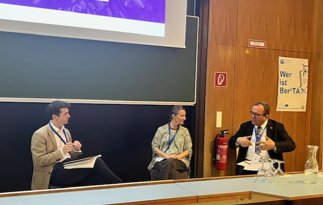
Ian Jeal, Executive Director of EQS hosting panel discussion with Prof. Dr. Marzia Morena FRICS and Prof. Dr. Harun Tanrıvermiş FRICS.
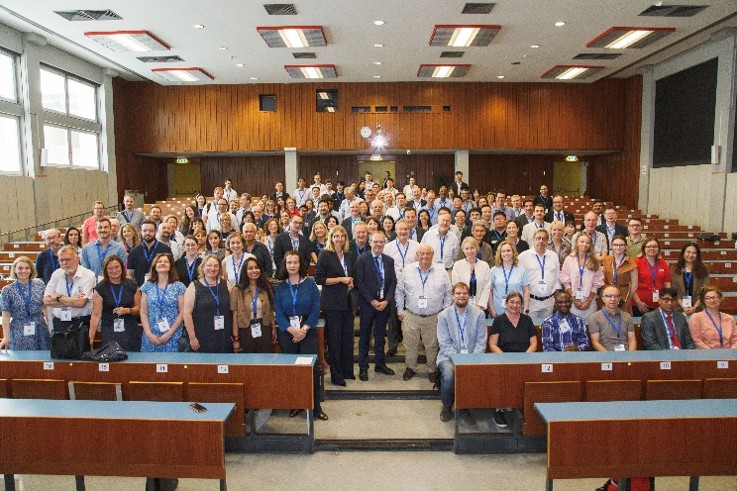
ERES 2026
RICS Accreditation Update 2026: Enhancing Quality and Global Consistency
RICS is introducing an updated accreditation policy and a new globally consistent accreditation fee structure, from the 2026/27 academic year. These changes strengthen quality assurance, improve transparency and provide greater clarity for institutions while maintaining the core framework that universities already know and value.
Amendments include:
- Clearer guidance on accreditation requirements
- Application forms more closely aligned to accreditation criteria
- Stronger quality assurance measures
- Expanded support and guidance for Transnational Education (TNE)
- Greater emphasis on graduate outcomes, industry engagement and diversity, equity and inclusion
- Improved annual monitoring and reporting processes.
These updates are designed to make the accreditation process easier to navigate while ensuring graduates continue to meet the evolving needs of the profession.
The updated policy reflects the increasingly international nature of higher education.
It recognises multiple international credit frameworks and provides significantly more detailed guidance for institutions delivering programmes through global partnerships and TNE arrangements. Key areas of change are in the table below:
| Area of change | 2019 Policy | 2026 Policy |
|---|---|---|
| Pathway mapping | General competency mapping | Explicit Level 1 mapping, max 2 pathways |
| Credit frameworks | Primarily ECTS-based guidance | UK, US, AQF, Asia-Pacific frameworks included |
| Student outcomes | Mentioned broadly | Graduate employability data expected |
| TNE | Covered | Entire section substantially expanded |
| External examiners | Required | Much more prescriptive requirements |
| DEI | Included | Expanded to DEI with international references |
| Industry engagement | Encouraged | Explicit expectations and evidence requirements |
| Annual monitoring | Required | Reporting deadlines and consequences specified |
| Costs & fees | Brief | Detailed provider obligations |
Accreditation fees
RICS applies fees for university programme accreditation. Different fee levels have been in place for different regions. From 2026/27 RICS will introduce a more consistent approach to accreditation fees.
For UK providers, a phased introduction has been agreed:
- Reduced fees in 2026/27 and 2027/28 academic years
- Reduced fees for institutions with multiple accredited programmes
- A maximum annual fee cap
- No fees for apprenticeship programmes.
Chartered Surveyor Degree Apprenticeship
Skills England have provided new information for the Chartered Surveyor Degree apprenticeship to re-confirm that the apprenticeship end-point assessment is the RICS APC. The apprenticeship is designed by a group of employers, who have reworded the assessment plan to increase the focus on the achievement of the APC as the outcome of the apprenticeship.
In addition to a clearer focus on the APC in the assessment plan, apprentices will be expected to take their APC at the first assessment window post-graduation.
We have produced updated guides for apprentices and apprenticeship providers which are available here and have run update events for providers if you have any questions, please contact your apprenticeship provider.
Celebrating Excellence in Construction Management: Civil Engineering Faculty, Warsaw University of Technology
The “Zarządzanie w budownictwie” (Management in Construction), a postgraduate programme delivered by the Faculty of Civil Engineering at Warsaw University of Technology, Poland was successfully re-accredited by RICS in November 2024, extending a relationship that began in 2017. The Faculty successfully enrolled students for the 20th edition of studies.
Organised by the Department of Production Engineering and Construction Management, the programme was developed to complement the technical education of civil engineers with the managerial, legal, financial and organisational skills needed to navigate today’s increasingly complex construction and investment environment. It is currently the only RICS-accredited programme in Poland.
The programme responds directly to the needs of professionals working across construction, real estate, infrastructure and investment. Its curriculum combines academic knowledge with practical application, covering areas including construction economics, business and construction law, organisation and management, marketing, human resources, financial and risk management, tendering, contract negotiation, construction process preparation, project control and occupational safety.
This combination of technical understanding and management expertise reflects the increasingly multidisciplinary nature of the built environment sector. Through a blend of theoretical and practical learning, students are equipped to apply management tools and approaches to real-world construction projects and develop competences that are relevant to employers across the industry.
- Built Environment European Summit 2026
Monday 19 October 2026 – Tuesday 20 October 2026
Hosted by RICS
- The Transforming Real Estate Sector and Public Policies
under Digitalization, Finance, and Climate Risks
Monday 1 February 2027 - Wednesday 3 February 2027
Hosted by Ankara University in Ankara Turkey
- European Education Forum 2027
Friday 23 April 2027
Hosted by ZHAW in Zurich
- European Real Estate Society (ERES) 2027
Wednesday 30 June 2027 - Saturday 3 July 2027
Hosted by KTH in Stockholm Sweden