

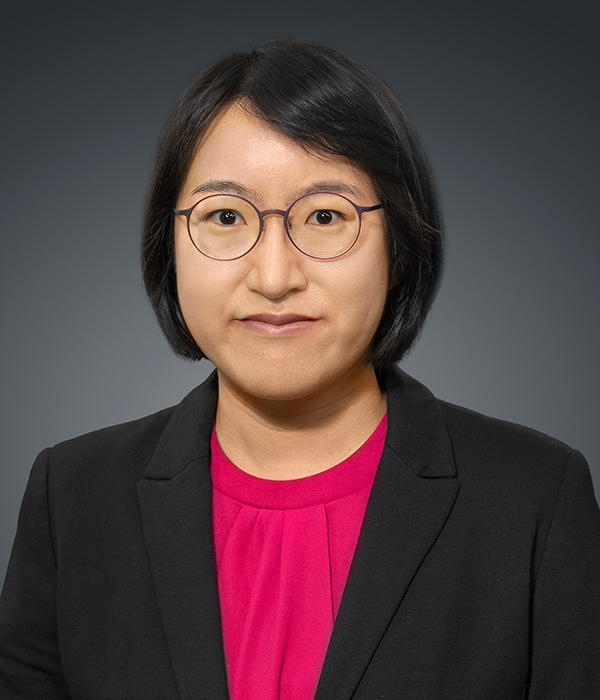
Meet Dr Ada Tsang: Lead Assessor in Hong Kong
-
 Email
Email
-
 Facebook
-
 Linkedin
-
 Twitter
-
 Whatsapp
09 February 2026
RICS Assessors play a crucial role in ensuring that only those who fulfil our ethical standards and professional competency requirements become RICS qualified professionals.
Acting as the gatekeepers to the profession, RICS assessors generously give their time, commitment, professionalism and expertise to assess potential new professionals, either by written submission or interview.
We were delighted to recently speak with Dr Ada Tsang MRICS, Lead Assessor in Hong Kong, about this crucial role.
Read the Q&A below to gain insight into the critical role Assessors have and advice for candidates currently on the journey to becoming members of RICS.
Learn more about the RICS community of 7000 active Assessors here.
What motivated you to become an Assessor?
The initial causes may be superficial: I can record my participation in the Assessor training and assessment process as CPD hours and have networking opportunities with other Assessors. However, there are many other reasons that have motivated me to become an Assessor for around ten years. During the process of the Assessment of Professional Competence (APC), we need to assess the performance of candidates with different working experience so it makes me always aware of the key features, roles and responsibilities of each type of surveyor; and keep myself updated about the latest development of the Hong Kong construction industry. In addition, I am satisfied with developing future surveying professionals.
What does being an Assessor involve?
The involvement of an Assessor is much more than it looks like. When I was a candidate, I thought Assessors were just required to attend interviews and ask questions. On the contrary, we are engaged in the entire APC process, from reviewing candidates’ submissions, preparing questions to be asked with other assessors, attending interviews and assessing performance, discussing their performance and preparing the referral report. We need to comply with the structured framework and robust timeframe to ensure the assessment is conducted in a fair and professional manner. We are also involved in regular Assessor training to equip ourselves with the latest assessment requirements, including new standards and guidelines.
Apart from the typical APC final assessment, there are different APC routes for RICS candidates. For example, we are invited to conduct a preliminary review of the assessment submission and confirm whether a candidate is ready to move forward to the APC final assessment.
In your time as an Assessor, how would you say the role has changed over time?
Although the key responsibilities are similar, the role has changed, with greater emphasis on further enhancing the quality of APC assessment. For example, we prepare the referral report in detail and provide more meaningful feedback to candidates for improving themselves. As chairperson, I work with other Assessors, particularly providing guidance to new assessors and facilitate the APC assessment process. Auditors would join interviews to audit the assessment panel, to ensure the process and policies for the assessment are being followed. They would provide observation results and offer positive suggestions to us. I have also been invited to serve on an appeal panel to conduct an independent review of the assessment process. Recently, I have become the Lead Assessor for the Quantity Surveying & Construction Pathway in Hong Kong, providing insights into entry and assessment policies, and delivering Assessor training, including standardisation requirements and events.
What advice would you give to candidates, currently on the journey towards becoming members?
I would give advice to candidates at different stages of the APC journey. First, it would be beneficial to use the APC candidate and pathway guide to become familiar with the detailed requirements. After understanding what to expect in the assessment, candidates have to plan their structured training. Although some candidates may think it is difficult to control their own planning, it would be useful if they regularly discussed their expectations with employers, particularly during the year-end review. They can also seek guidance from their counsellor proactively. It is understandable that counsellors may be busy with their work, but they can definitely share valuable working experience and offer constructive feedback for their preparation of APC assessment. Last but not least, candidates should put in considerable effort to complete their submission to ensure it complies with the requirements and be familiar with it to demonstrate their competency to assessors during the interview.
Why should other members sign up to be an assessor?
Like me, I believe other members can enjoy the various benefits of being an Assessor. Those benefits are what motivate me to become an Assessor. In particular, using myself as an example, I worked as a quantity surveyor (QS) for a developer which focuses on building projects, while other members in my pathway – quantity surveying and construction – work for different stakeholders, such as client, consultant and contractor; and they have experience in civil, building, E&M, fitting out, etc. By working with other members, they can broaden their horizons, which are very useful for developing their career in future.
How has the journey towards becoming a member and then Assessor, helped you grow/develop in your current role?
This journey has helped me grow my career from working as an Assistant Quantity Surveying Manager in the industry to being a Lecturer on the academic side. When I worked as a client-side QS, this journey helped me guide junior staff during daily work to achieve different technical competencies. More importantly, RICS advocates mandatory competencies of the profession. I would view those mandatory competencies as essential soft skills for our work, such as client care and communication, etc. They would be vital for my career development, as being a middle manager is not just about getting the technical tasks done. Currently, I am a Lecturer for the new QS undergraduate programme at Hong Kong Metropolitan University. This journey helps me develop the curriculum and teach university students by sharing my APC and working experience with them.
What do you see as the critical industry factors (economic, societal, geopolitical) influencing the surveying profession over the next decade?
The influence of these industry factors varies across pathways, but all can impact the surveying profession. For instance, the geopolitical factor is a macro one which determines the risk assessment of investments under the corporate real estate pathway. For quantity surveying & construction (QS&C), the economic factor affects construction costs, while the societal factor influences development considerations and design options. In addition to these critical industry factors, other important factors influencing the surveying profession in recent years include sustainability and environmental, social and governance (ESG). This is why surveyors need to understand the latest developments, particularly those related to their pathways.

Dr Ada Tsang
Lecturer, Hong Kong Metropolitan University
Dr Ada Tsang is an experienced quantity surveyor with extensive research experience. She has substantive experience of RICS assessments as she has been an assessor since 2016 and as a chairperson from 2021 onwards. In addition to this, she supports RICS with preliminary reviews and Chartered Alternative Designation (CAD) assessments on a regular basis. Dr Ada Tsang currently works for Hong Kong Metropolitan University as a Lecturer. Before joining the University, she was an Assistant Quantity Surveying Manager of Chinachem Group and was responsible for construction cost management, contract administration and managing consultant QS’s performance. She has participated in wide variety of projects such as major building and civil works from both the client and contractor sides. Dr Ada Tsang brings in-depth knowledge of health and safety with her research investigating safety violations of the construction workers in Hong Kong having won two awards from the Hong Kong Institution of Engineers as well as the Occupational Safety and Health Council.