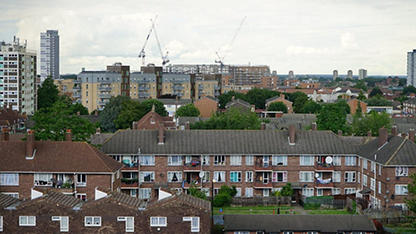

What the 2026 Scottish manifestos mean for the built and natural environment
-
 Email
Email
-
 Facebook
-
 Linkedin
-
 Twitter
-
 Whatsapp
06 May 2026
With the 2026 Scottish Parliament election fast approaching, the built and natural environment sits at the heart of all major parties’ plans for economic growth, housing, and net zero. While there is broad agreement on the importance of housing delivery and planning reform, the routes each party proposes vary significantly, particularly on regulation, climate policy, and the role of the state.
All recent polling suggests that the Scottish National Party (SNP) will be the largest party come the 8th May; however, whether they will secure a majority or not is currently too close to call, with the latest MRP poll from More in Common, suggesting that they may be short of a majority by 5 seats. As such, the likelihood of coalition or confidence-and-supply agreements is high, which raises the prospect of blended policy outcomes, particularly if the SNP and Greens cooperate, as seen previously.
For the built environment sector, this creates both opportunity and uncertainty. While housing delivery and planning reform are likely to remain central priorities, the direction of travel on net zero, regulation, and land reform will depend heavily on the political balance after the election.
Earlier this year, RICS published it’s manifesto - Surveying Scotland, which set out practical, evidence-based policy proposals for the next Scottish government. It focuses on five interlinked priorities that will define the coming decade:
- Tackling the housing emergency
- Driving the green economy
- Ensuring we maintain our existing assets
- Securing the future of Scotland’s land.
- Delivering the skills and workforce necessary to achieve these ambitions.
We have assessed each manifesto based on these policy areas.
Housing: Shared priority, different approaches
Housing supply is a central theme across all manifestos, but with notable differences in scale and delivery. The SNP, Scottish Labour and the Scottish Liberal Democrats propose large-scale housebuilding programmes, including major affordable housing commitments and new delivery vehicles such as a national housing agency – More Homes Scotland (SNP) and a housing investment bank (Labour). They all also support reforms to unlock land and accelerate development, with the Liberal Democrats also opting for deregulation, proposing a review of Land and Buildings Transaction Tax (LBTT) and reform of non-domestic rates.
This approach aligns closely with that of the Scottish Conservatives and Reform UK, who emphasise market-led delivery, proposing tax cuts and deregulation to stimulate supply - removing LBTT and reform non-domestic rates (Reform UK), with less focus on affordability or tenure mix.
In contrast, the Scottish Greens take a more interventionist approach, focusing heavily on social housing and stricter development standards, alongside stronger tenant protections and rent controls.
The green economy: A clear dividing line
Perhaps the starkest differences lie in climate and retrofit policy. The Greens, Liberal Democrats and SNP maintain strong commitments to decarbonising buildings, including heat transition policies, although detail on retrofit delivery remains limited in places.
Labour takes a more pragmatic approach, supporting clean heating and local energy initiatives but placing less emphasis on whole-house retrofit strategies.
By contrast, the Conservatives propose rolling back elements of existing net zero policy, while Reform UK goes further, calling for the removal of net zero commitments altogether. These positions could significantly slow progress on energy efficiency and low-carbon construction if implemented.
Existing assets: Regulation, standards and the role of the state
The Greens’ manifesto stands out for its emphasis on stronger regulation, including new taxes (such as a demolition levy) and tighter standards for development and land use.
The SNP, Liberal Democrats and Labour strike a more balanced position, combining regulatory reform with targeted intervention, particularly around building safety, tenement maintenance, and housing quality.
In contrast, the Conservatives and Reform UK prioritise deregulation, proposing to remove or reduce levies, taxes, and planning constraints, with a greater reliance on market mechanisms.
Scotland’s land: Reform vs regulation
Planning reform is another area of broad consensus, though again with diverging philosophies. The SNP, Liberal Democrats and Labour aim to streamline and modernise the system to support growth, including reforms to compulsory purchase and planning capacity.
The Greens propose a more restrictive, sustainability-led planning system, prioritising nature, community outcomes, and brownfield development, alongside measures to tackle land ownership (Compulsory Sale Order) and speculation. Meanwhile, the Conservatives and Reform UK favour significant deregulation, seeking to reduce bureaucracy and speed up development – scrapping the Building Safety Levy (Conservatives).
Skills, Infrastructure and Investment
Most parties recognise the need to address skills shortages and support workforce development, particularly in construction and green jobs. All parties, bar the Scottish Conservatives and Reform UK, link skills policy to the net zero transition, with the Liberal Democrats, SNP and Labour specifically mentioning the construction sector. The Conservatives and Reform focus on broader education reform and addressing labour shortages, with a distinct focus on apprenticeships and adult re-skilling.
Infrastructure investment is also widely supported, though detail varies. The SNP proposes a new Major Projects Office, while other parties emphasise infrastructure as a driver of economic growth but provide less clarity on long-term funding models.
You can find all the main parties’ manifestos here:
2026 Scottish Parliament Election Manifesto - Scottish Conservatives
2026 Scottish Greens Manifesto - Scottish Greens
Manifesto 2026 - Scottish Labour
2026 Manifesto - Scottish Liberal Democrats
Scotland Manifesto | Reform UK
SNP 2026 Manifesto: Always on Scotland’s side - Scottish National Party
For further information about our work in Scotland, please contact Senior Public Affairs Manager, Robert Toomey at rtoomey@rics.org