

Global Building Conservation Conference 2026
-
 Email
Email -
 Facebook
-
 Linkedin
-
 Twitter
-
 Whatsapp
From £135 + VAT
The Global building conservation conference brings together international experts to discuss the assessment, maintenance and adaptation of historic buildings. This year’s programme examines how changing definitions of heritage, evolving regulation and increasing environmental pressures are reshaping conservation.
The programme will explore the impact of modern demands, like climate change, energy efficiency, and defects on historic buildings. There will be a particular focus on retrofitting and how interventions intended to improve performance can sometimes introduce new problems if not approached carefully. It will also examine ventilation and moisture in traditional buildings, and the practical challenges of managing internal conditions, to support occupant comfort and health.
Beyond traditional construction, attention turns to later 19th and 20th century buildings, where materials like concrete present complex and often unresolved conservation questions. The conference also investigates how previously disregarded old buildings are being adapted for community use. Ultimately, the conference reflects on how professionals can respond to emerging pressures with clear judgement, adapting yesterday’s buildings to modern challenges while retaining their heritage value.
Learning outcomes
Confidently define and assess heritage and historical significance, supporting consistent, defensible professional judgement when managing change to historic buildings.
Make informed decisions when managing historic buildings exposed to climate and environmental risks, helping professionals plan practical resilience strategies.
Identify common causes of damp, mould and poor ventilation in traditional building fabric and improve internal conditions and occupant wellbeing.
Apply appropriate retrofit strategies that support energy performance alongside the protection of historic fabric.
Recognise typical defects and failure mechanisms in 19th and 20th century materials, including early concrete, and respond with effective remediation.
Support the long term viability of historic buildings through adaptive reuse restoring function and cultural significance.
Conference chair

David Humphreys FRICS
Director and Chair of RICS Building Conservation Advisory Group, ACP Group and RICS
David established the practice in 2000 following an overseas career in the UK and Australia. He has over 30 years experience in both public service and private practice in Ireland, the UK and Australia. David spent 8 years working as a Senior Professional Officer with English Heritage. He is a Chartered Building Surveyor, Chartered Building Engineer, Chartered Project Manager, and Chartered Landscape Architect/Manager.
Speakers

Ambrish Arora
Founding Principal, Studio Lotus
Ambrish is Founding Principal at Studio Lotus, a globally recognised, multi-disciplinary design practice founded in 2002. Spanning the domains of Master Planning, Architecture, and Interior Design, the work of the studio is grounded on the principles of Conscious Design - an approach that celebrates local resources, cultural influences, an inclusive process, and keen attention to detail. Ambrish’s role is largely studio-focused, leading design processes that direct the trajectory of projects. He is deeply involved with assessing benchmarks of innovation and sustainability for the studio’s ongoing work - including aspects related to thermal comfort, and localization of material and process. Ambrish has persistently campaigned for the amalgamation of vernacular wisdom with modern building practices; for frugal and passive means of construction - often achieved through integration of artisanal skillsets - as a means to achieve cultural, social as well as environmental sustainability.

David Hourihan MSc Prop Invest FSCSI FRICS
Head of Academic Profile & Impact, University of the Built Environment
David is chartered surveyor with over 30 years of industry and education experience across the Ireland and the UK. This includes over fifteen years of industry experience in office agency, shopping centre asset management and commercial property valuations in both Ireland and the United Kingdom. He worked with several leading real estate firms including JLL and Colliers International. He has sat on Governing Council since June 2023 and is currently the ‘Commercial Property’ seat holder on RICS Governing Council. In his 2024 re-election campaign for Governing Council, he pledged to ‘Supporting next generation and DEI initiatives to attract a bigger and more diverse pool of talent to our industry’. He also pledged to have more academics ‘Chartered’ as he believes they hold a pivotal role in encouraging more students to become RICS surveyors. David is an RICS ‘Inspire Ambassador’ encouraging UK secondary school students, our ‘next generation’, to pursue careers in construction and real estate. He has given presentations at several British, Irish and French universities to promote membership of RICS. As a male ally, he has represented RICS and participated in events including London PRIDE; the ‘Investing in Women surveyors: International Women’s Day’ conference; a panel discussion at the book launch of ‘Building Women’ and promoting surveying at careers days in association with the ‘Association of Muslim Surveyors Initiative’ and ‘Muslims in Real Estate’. He is the ‘Head of School for Real Estate and Innovation’ and an associate professor at the University of the Built Environment. David specialises in property investment, property asset management and property agency in the commercial property sector. He has produced training and published in ‘Estates Gazette’ on the use of Discounted Cashflows in commercial property appraisals and valuations. David is a knowledge expert at his university on the subject of ‘Ethics’. David has given several presentations in the UK, Caribbean, Ireland and France on the professional behaviours and ethical standards of chartered surveyors.

Richard Lawrence
Architect and Head of Design, PJ Livesey Group
Richard is an Architect and Head of Design at Manchester-based P J Livesey Group, a specialist property developer focused on converting heritage assets into distinctive new homes. With over 45 years of history, the company has built a national reputation for the sensitive transformation of listed buildings. Originally from near York, Richard is proud to be leading the design of The Retreat’s conversion and brings experience across hospital redevelopments, residential masterplans, and bespoke housing within Grade II and II* Listed Buildings. Prior to joining PJ Livesey, Richard studied at the Centre for Alternative Technology and worked with an environmental social enterprise and charity. This experience shaped his understanding of climate change, ecology and sustainability, with perspectives that continue to inform his approach to adaptive reuse of historic buildings.

Samantha Organ FRICS
Associate Professor in Building Sustainability at University of the West of England, Founding Director at SO Associates
Samantha is a building surveyor, a fellow of the RICS and Associate Member of the ICE. She divides her time between academia and practice, and uses her expertise to provide advice and strategic guidance on sustainability for built assets. She is currently Associate Professor in Building Sustainability at the University of the West of England and Heritage Lead at Building Heritage & Co, enabling her to merge cutting-edge thinking with practice. Samantha previously worked for the National Trust, Europe's largest conservation charity as a building surveyor and in the directorate to provide national guidance on sustainability for built assets. In academia, Samantha lectures and supervises undergraduate and postgraduate students. Her research primarily focuses on sustainability and energy efficiency in existing buildings. She has written numerous publications for a range of audiences, including academic papers, reports, professional and newspaper articles. She is a current member of the RICS BCAG. She mentors early career surveyors, including through the Circle Partnership.

Verity Ramsden MRICS
Heritage Viability Specialist and Member of RICS Conservation Advisory Group (BCAG)
Verity is a Chartered Surveyor and heritage professional specialising in viability, adaptive reuse and regeneration of historic buildings and urban centres. In August 2025 she relocated to Saudi Arabia, leaving her role with Historic England where for the last five years she had been advising public bodies, developers and building owners on how to balance heritage significance, planning policy, and financial viability to deliver sustainable outcomes. Throughout her career she has been recognised for her ability to bridge the gap between the heritage and real estate sectors, translating conservation requirements into commercially-deliverable solutions. Before joining Historic England, Verity worked for a heritage trust in Uganda, promoting the preservation and reuse of historical sites, and as a RICS Registered Valuer at real estate advisory firms in Myanmar and the UK.

Dr Eugene Seah
Chief Executive Officer, DLS Consultancy Pte Ltd
Dr Eugene Seah is the CEO of DLS Consultancy Pte Ltd, a firm that provides Project Management, Cost and Contracts management, Contracts and Business Advisory that touches on Sustainability, Resilience , Digital and Technology. With more than 25 years of experience behind him and the vast experience on projects of various asset class and sectors, as well as business management under his belt, he is able to bring value to projects that is holistic in nature, taking into account contemporary issues in the industry. He enjoys being in practice , education and research , grooming the younger generation in the Industry of Singapore and South East Asia. He is an Adjudicator , an Adjunct Associate Professor at Taylors and a Visiting Fellow of the University of Reading Malaysia. He currently holds the position of President of Building Smart Singapore, the Chairman of the RICS South East Asia Board and Singapore Chapter and Chairman of the International Cost Engineering Council. He enjoys serving and giving back to society. He is a member of COMPASS in MOE and is the Chair of the National Youth Achievement Award Council as well as committee members of several NGO committees.

Wendy Ng
Director, Revival Heritage Consultants Limited, Past President of The Hong Kong Institute of Architectural Conservationists
Wendy Ng is an experienced architectural conservationist with a diverse portfolio encompassing a broad spectrum of projects. Her expertise extends from conducting academic research on individual buildings to historic urban landscapes and rural villages, developing conservation strategies and policies, and conservation works for restoration, adaptive reuse, and interpretation of heritage sites. Beyond her notable contributions in Hong Kong, Wendy also participates in heritage projects in Shanghai and Singapore. She holds pivotal roles as the director of Revival Heritage Consultants Limited, the past President of Hong Kong Institute of Architectural Conservationists (HKICON, 2023-2025), and a member of Docomomo International Hong Kong Chapter.

Ann Gray FRICS, FAIA, RIBA
Principal, Gray Real Estate Advisors, Past President, RICS
As principal at Gray Real Estate Advisors, Ann Gray advises property owners, investors and attorneys on development related issues often including preservation strategies. Among many others, she has consulted to Citibank, Wells Fargo, Crimson Pipeline, The Los Angeles Times, the South Coast Transit District and the Auto Club of Southern California. For nine years Ann served on the Global Governing Council of the Royal Institution of Chartered Surveyors and was elected to its presidency in 2023. Prior to forming her company, Ann oversaw development of the studio lot at Paramount Pictures for eight years where she oversaw approximately $500 million in new construction and remodeling of industrial, corporate, and specialized production facilities. Ann is the founder of Balcony Media, Inc. publisher of art and architecture books and previously FORM magazine. Ann Gray is a licensed architect and real estate broker. She has degrees in Math and Architecture both from UCLA.

Elisabetta Rosina
Associate Professor, Politecnico di Milano
She obtained the National Scientific Qualification for the role of full professor in 2018. She is competent in the conservation and restoration of Cultural Heritage, with specific knowledge on the historical structure and materials of European buildings. She is particularly competent in design, planning and execution of non-destructive investigations and degradation assessment and documentation on buildings, for preservation and maintenance. Her major competencies are in preservation technologies for historic buildings, assessment of the performances and degradation of building materials, diagnostic methodologies and techniques such infrared thermography, gravimetric tests, microclimatic monitoring, psychrometric maps, videoscope, iron/steel structures search inside masonry and instrumental surveys. She is the scientific responsible for the Experimental mobile laboratory of ABC Dept. Polytechnic of Milan.

George Ballard
George is a lifetime professional in structural building assessment, concrete and materials technology, conservation, and the application of technological solutions to these disciplines. He has built this Practice in Building Inspection and Remediation that now covers Europe, North America, and Australia. George will work on TO20 SV-058 – Structural Monitoring on the Restoration and Renewal Programme.

Kaitlin Drisko
Principal, Drisko Studio Architects
Kaitlin Drisko is principal of Drisko Studio Architects, a small design firm that merges architectural principles with conservation practices. With emphasis on the stewardship of cultural and historic resources, the studio views architectural design as an opportunity to understand our environment, discern patterns of living, engage with existing contexts, and create meaningful accompaniments to our lives. Educated and licensed to practice in both architecture and engineering, Kaitlin received engineering degrees from the California Institute of Technology and UC Davis and a Master of Architecture from the University of Wisconsin Milwaukee. Past recognition includes a Thomas Watson Foundation fellowship for international study of museum design and a Graham Foundation grant for documentation of buildings by the architect Irving Gill. Kaitlin is a LEED AP and past Board Member of the Santa Monica Conservancy.

Sarah Khan
Architect accredited in Building Conservation, Roger Mears Architect
I am an Architect Accredited in Building Conservation (AABC), as well as accredited with the RIBA as a Specialist Conservation Architect. I have worked at Roger Mears Architects (RMA) since 2007 and have been a Practice Partner since 2015. RMA has a strong track record of working in Conservation, something I am deeply passionate about. I am a member of the Society for the Protection of Ancient Buildings (SPAB) as well as a past SPAB Guardian as part of their Technical and Research Committee, a member of the Institute of Historic Building Conservation (IHBC) and a past member of the RIBA Conservation Group. I am on the London Diocese, Southwark, Peterborough, Chelmsford and St Albans Diocese lists of Quinquennial Inspecting Architects, and the Church Architect for various Grade I and II listed in London. I also work with many community and grant-aided projects, as well as buildings on the Historic England Heritage-at-risk register. I am also currently leading the Practice’s research project into sustainable upgrading of historic buildings.

Caitlin DeSilvey
Professor, University of Exeter

Andy Beardsley MRICS
Chartered Geospatial Surveyor, The Survey Association Council Member, SPAB Guardian, Managing Director, Terra Measurement Limited
Tom Bosence MRICS
Managing Director, Bosence Associates
Tom began his working life practising traditional craft skills such as lime plaster/ pointing, traditional slating techniques, cob repair, masonry techniques (including carving and letter cutting). Having made the move to more professional and less practical roles, he worked for some of the largest conservation contractors in the country. These roles involved running complex conservation projects and contract management. He has since trained as a Chartered Surveyor and has worked for prestigious conservation organisations such as the National Trust and English Heritage. He is a full member of the Royal Institution of Chartered Surveyor (MRICS), the Chartered Institute of Building (MCIOB) and the Institute for Historic Building Conservation (IHBC). He has achieved the status of Certified Historic Buildings Professional from the RICS. This combination of achievements is very rare: very few people in the sector have the required skill, knowledge and experience to attain all of them.
Rohit Jigyasu
Programme Director, SEAMEO Southeast Asian Regional Centre for Archaeology and Fine Arts
Rose Lord
Built Environment Advisor, Lake District National Park Authority
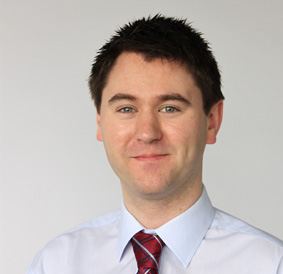
Eoin Cullinane
Engineering Design, Consents and Compliance Manager, Commissioners of Irish Lights
Eoin is a civil engineer with over 20 years' experience on a wide range of infrastructure projects. He has worked for client bodies and contractors on roads, flood protection, site development, and water services projects in Ireland & the UK and on several major international contracts funded by multilateral development banks to deliver water and sanitation infrastructure in Africa and Eastern Europe. Eoin is currently Engineering Design, Consents & Compliance Manager with the Commissioners of Irish Lights managing the delivery of maintenance, rehabilitation and upgrade projects to ensure the ongoing resilience of the Aid to Navigation assets which make up the Irish Lights estate across Ireland and Northern Ireland. He is also responsible for ensuring that all Irish Lights plans and activities are undertaken in compliance with the relevant environmental and planning requirements in both jurisdictions. Eoin is an active member of Engineers Ireland and is a former member of the institution CPD Standing Committee and a former Chair of the Water & Environment Committee.
HKT | GST | BST | Session |
14:30 | 10:30 | 7:30 | Registration |
15:00 | 11:00 | 8:00 | Chair welcoming remarks David Humphreys FRICS, Group Director, ACP Group; Chairman of the RICS Building Conservation Advisory Group |
15:15 | 11:15 | 8:15 | Opening remarks from the RICS David Hourihan FRICS, Associate Professor and Head of School, Real Estate and Innovation, University of the Built Environment; Commercial Property Seat, RICS Governing Council |
15:25 | 11:25 | 8:25 | Keynote address Rethinking heritage and historical significance Our opening address examines how we define heritage today. It will explore how the significance of historic buildings is assessed, and how those definitions are shifting over time. |
15:55 | 11:55 | 8:55 | Break |
16:10 | 12:10 | 9:10 | Panel Extreme weather, earthquakes and structural resilience Heritage buildings must now respond to increasingly harsh environmental pressures. As a result, this session will review how extreme weather, earthquakes, and coastal change lead to degradation and how practitioners can support their buildings in response. Moderator: Samantha Organ FRICS, Associate Professor in Building Sustainability, University of the West of England; Heritage Lead, Building Heritage & Co. Vikas Dilawari, Conservation Architect, Vikas Dilawari Architects Rohit Jigyasu, Programme Director, SEAMEO Southeast Asian Regional Centre for Archaeology and Fine Arts Ohnmar Myo, Senior Researcher, SEAMEO Regional Centre for Archaeology and Fine Arts Andy Beardsley MRICS, Managing Director, Terra Measurement |
17:10 | 13:10 | 10:10 | Break |
17:25 | 13:25 | 10:25 | Panel Global examples of adaptive reuse Case studies from across different regions will explore how heritage structures, including industrial buildings are repurposed. The session will encourage critical evaluation of decision-making at each stage and determine how successful examples perform over the long term. Moderator: Verity Ramsden MRICS, Heritage Viability Specialist and Member of RICS Conservation Advisory Group (BCAG) Richard Lawrence, Head of Design, PJ Livesey Group Wendy Ng, Director, Revival Heritage Consultants Limited, Past President of The Hong Kong Institute of Architectural Conservationists Ambrish Arora, Founding Partner, Studio Lotus |
18:25 | 14:25 | 11:25 | Break |
18:40 | 14:40 | 11:40 | Moisture, Ventilation and Traditional Building Design Through case studies of historic buildings and contemporary projects inspired by traditional regional architecture, this session explores how moisture management, ventilation and design approaches contribute to healthier, more comfortable indoor environments. Elisabetta Rosina, Associate Professor, Politecnico di Milano Cesar Diaz Cano, Design Cultural Assets Associate Director, Diriyah Company |
| GST | BST | EDT | |
| 15:40 | 12:40 | 7:40 | Midday break |
16:15 | 13:15 | 8:15 | Safe retrofit of historic buildings How can historic buildings be adapted to improve energy performance without compromising their character? This session will explore retrofitting methods used by practitioners to safely reduce heat loss while protecting historic fabric. It will also consider how solar panels can be successfully integrated into heritage settings, balancing energy efficiency, building performance and conservation requirements. Rose Lord, Built Environment Advisor, Lake District National Park Authority Sarah Khan, Architect accredited in Building Conservation, Roger Mears Architect |
17:00 | 14:00 | 9:00 | Break |
17:15 | 14:15 | 9:15 | An American perspective on preserving recent heritage A technical exploration of more recent buildings with historical significance, with a focus on case studies involving the conservation and remediation of concrete and other modern materials. The discussion will confront the specific challenges these materials present in terms of deterioration, repair strategies and long-term performance. Moderator: Ann Gray FRICS, FAIA, RIBA, Principal, Gray Real Estate Advisors, Past President, RICS George Ballard, Chairman, GBG Group Kaitlin Drisko, Principal, Drisko Studio Architects Morgan Sykes Jaybush, Creative Director, Legacy Leed AP, Omgivning |
18:20 | 15:20 | 10:20 | Break |
18:35 | 15:35 | 10:35 | Panel Preserve, adapt, or reconsider? A closing discussion on difficult decisions in conservation. Panellists will reflect on when to preserve a historic building versus when to adapt, and how to approach buildings with uncertain futures. Moderator: Caitlin Desilivey, Professor, University of Exeter Sr Dr Eugene Seah, 2nd Vice President, SISV, Chief Executive Officer, DLS Consultancy Tom Bosence MRICS, Managing Director, Bosence associates Eoin Cullinane, Engineering Design, Consents and Compliance Manager, Commissioners of Irish Lights |
19:35 | 16:35 | 11:35 | Closing remarks David Humphreys FRICS, Group Director, ACP Group; Chairman of the RICS Building Conservation Advisory Group |
19:50 | 16:50 | 11:50 | Conference ends |
Event supporters


“The subjects were presented with knowledge and care, and it was clear that the speakers and all involved put in a considerable amount of work behind the scenes. Congratulations!”
“I was so intrigued I played back the recorded content at my leisure to pick up more details.”
“I gave this score as the global conference was excellently managed and remained stable and engaging throughout the entire day. It provided many things for myself to reflect and gain more knowledge about the discussed presentation subjects.”
Group discounts
- Book 3 to 5 places and get 5% off.
- Book 6 to 7 places and get 10% off.
- Book 8 to 25 places and get 15% off.
- Book 26 to 50 places and get 20% off.
- Book 51 to 100 places and get 25% off.
- Book 101 and more and get 30% off.
Any subscriber to the Development Package or Qualification Support Package receives 15% discount on conferences that are not included in either package.
You may also be interested in

Webinar
Global Resilience planning in building design: preparing buildings for a changing risk landscape
• 1 hour structured CPD • Online
£36
+ VAT

Web Class
UK&I Home Surveys in Practice - 3 Part Web Class
• 6 hours structured CPD • Online
From £195
+ VAT

Webinar
South Asia Beyond disputes: effective dispute resolution in India’s built environment webinar
• 1 hour structured CPD • Online
Free

Conference
Northern Ireland Conference
Wed 09 Sep 2026 • 08:00 - 17:15 BST • 6 hours structured CPD • La Mon Hotel & Country Club, 41 Gransha Road Castlereagh, Belfast, BT23 5RF, Northern Ireland
From £104.98
+ VAT

Webinar
UK&I Building safety act: the latest guidance for surveyors
• 1 hour structured CPD • Online
From £27
+ VAT

Seminar
RICS in West Midlands: Breaking the Taboo on Claims and How to Handle Them
Tue 15 Sep 2026 • 08:30 - 11:00 BST • 1 hour structured CPD • Bank House Hotel, Bransford, Worcester, WR6 5JD
£10
+ VAT

Seminar
RICS in the Black Country: Industrial Heritage, Digital Innovation - AI in Surveying & Museum Tour
Fri 18 Sep 2026 • 08:30 - 10:45 BST • 1 hour structured CPD • Black Country Museum, Discovery Way, Dudley, DY1 4AL
£10
+ VAT

Conference
RICS Bewertungskonferenz 2026
Tue 22 Sep 2026 • 09:45 - 16:30 CEST • 6 hours structured CPD • PricewaterhouseCoopers GmbH Wirtschaftsprüfungsgesellschaft, Frankfurt am Main
From €326
+ VAT

Conference
India CRE Conference
Wed 23 Sep 2026 • 09:00 - 17:00 IST • 6 hours structured CPD • JW Marriott Bengaluru, 24/1 Vittal Mallya Road, Bengaluru 560001, India
From ₹5548.37


